From CRM to Agentic Enterprise: Preparing Your Salesforce Strategy for 2026
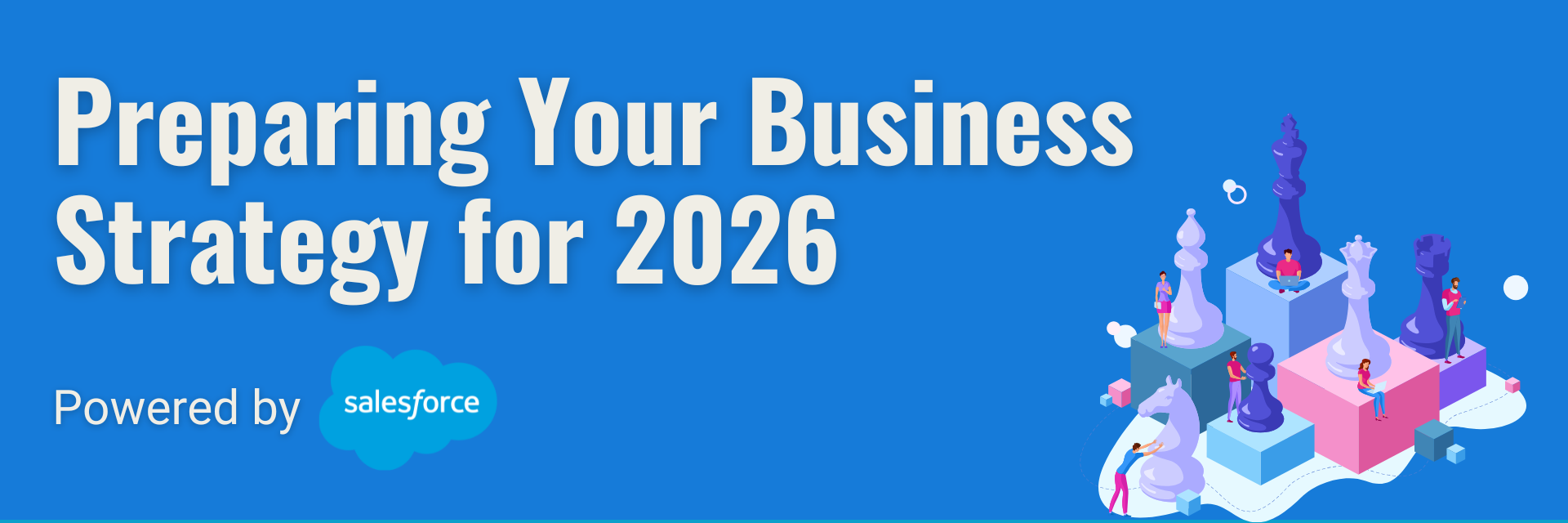
 Target Everest |
 Salesforce is entering a new chapter in 2026.
Over this year, three movements will reshape how teams work on the platform:
- The rise of the Agentic Enterprise, led by Agentforce 360.
- Data 360 as the strategic data layer for AI and agents, evolving from Data Cloud.
- Slack positioned as an agentic OS, the workspace where people, data and AI agents meet.
In parallel, the EU AI Act moves from theory to enforcement, with high-risk AI systems expected to be compliant by 2 August 2026.
For many organisations, this mix of opportunity and regulation feels exciting and slightly uncomfortable. The goal of this article is simple: show what is really changing, where Agentforce fits in your business, and how to move forward with structure.
1. What is really changing in 2026?
Salesforce’s message is clear: AI does not replace people. It elevates them, through agents that understand goals, call the right tools and act across systems.
Three pillars support this vision:
- Agentforce & Agentforce 360
The platform to design, deploy and monitor AI agents across Sales, Service, Marketing and custom apps, all grounded in Salesforce data and security.
- Data 360 as the foundation
Salesforce has formally rebranded Data Cloud to Data 360, emphasising a unified, AI-ready view of customers across channels and systems.
- Slack as the agentic workspace
Slack is being reframed as your “agentic OS”: a place where channel-based experts, a rebuilt Slackbot and Enterprise Search connect conversations, data and agents.
On the regulatory side, guidance from the European Parliament and analysis from organisations such as Trilateral Research confirm a phased EU AI Act timeline: prohibited practices from 2025, rules for general-purpose AI in 2025, and full obligations for high-risk systems from August 2026.
Put together, 2026 is not “just another release”. It is a shift from static processes to human + agent collaboration, under clearer expectations of transparency, risk management and human oversight.
2. Why many Salesforce teams feel unprepared
Across Salesforce, IT and business leaders, the same patterns keep appearing:
- Fragmented data
Information is spread across multiple orgs, legacy tools and spreadsheets. Agents cannot make good decisions without a complete, consistent view.
- Brittle processes
Years of urgent requirements have produced flows, triggers and workarounds that nobody fully owns. Letting agents act on top of this feels risky.
- AI as a side project
There are pilots in sales or service, but no shared architecture or risk model. Wins are hard to scale; failures are hard to learn from.
- Regulation that feels abstract
The EU AI Act is on the radar, but it is not yet mapped to concrete use cases in Salesforce, Slack or Agentforce.
The result: impressive demos, but a daily reality still dominated by manual work and exports.
3. Where Agentforce fits in your business
To make this tangible, it helps to look at practical Agentforce scenarios – some internal, some customer-facing.
3.1 Agentforce for internal teams
Sales – Opportunity Assistant (Sales Cloud)
- Reviews open opportunities (stage, history, activities, emails).
- Flags risks such as stalled deals or missing decision-makers.
- Suggests next best actions directly in the opportunity or via Slack.
Example:
“This opportunity has been in Proposal for 14 days without a reply. Suggest following up with decision-maker X and attaching document Y.”
Value: fewer forgotten deals, better forecasts, higher win rates.
Finance – Contract Validation (Sales + Service + Data 360)
- Reads contracts in PDFs, attachments and email chains.
- Checks terms, penalties and amounts against your standards.
- Alerts finance or legal when something is outside the norm.
Example:
“Contract with customer ABC has a 36-month term instead of the standard 24. Requires validation.”
Value: reduced contractual risk, less manual review, stronger compliance.
Support – Case Triage (Service Cloud)
- Analyses case descriptions, emails and customer history.
- Classifies type, urgency and impact.
- Routes to the right team or proposes an initial response.
Value: faster response times, fewer reassignments, better agent experience.
3.2 Agentforce for customer experience
Omnichannel Service (Service Cloud + Chat/WhatsApp)
- Handles conversations on chat, WhatsApp or web.
- Uses full customer history to personalise answers.
- Resolves simple requests or hands off to humans with full context.
Value: quicker answers, less friction, consistent experience across channels.
Real-Time Marketing Personalisation (Marketing Cloud + Data 360)
- Reads behaviour (opens, clicks, browsing, purchases).
- Chooses the best message, channel and timing.
- Adjusts journeys in real time.
Example:
Customer ignores several emails → the agent pauses email and recommends WhatsApp or a call.
Value: less noise, more relevance, better conversion.
Behind all this, Agentforce respects Salesforce permissions; actions are logged; and humans stay in control where it matters – a natural fit with EU AI Act principles such as human-in-the-loop and traceability.
4. A practical Salesforce roadmap for 2026
You do not need a perfect architecture to start. You do need a clear sequence:
- Map AI use cases to risk, not just to features
Catalogue where you use or plan to use AI and agents. Classify each use case by business impact and EU AI Act risk tier, especially anything that affects access to services, credit, employment or public decisions.
- Build a focused Data 360 core
Start with the journeys that matter most (for example, lead → opportunity → contract → onboarding → support). Bring those objects and events into Data 360 and align access, masking and retention with your existing Salesforce governance.
- Design agentic workflows with guardrails
Give each agent a clear “job description”: what it can do, which tools it may call, when it must hand off and how its actions are logged.
- Prepare people for Slack as the AI hub
Standardise channel usage, train teams to work with Slack AI features, and involve legal and security early so Slack policies reflect how people actually collaborate.
If you are looking at 2026 and wondering how to move from “CRM with AI features” to a genuine agentic enterprise, this is the moment to set the foundations – with clarity, discipline and a bit of ambition. Let’s talk!
Do you want to hear more?
Our team of experts specializes in Salesforce and is dedicated to providing top-notch services to help your business succeed. If you're looking for Salesforce® solutions or have any questions, please feel free to reach out to us. We'd love to hear from you.
Contact us